

Opening Thought
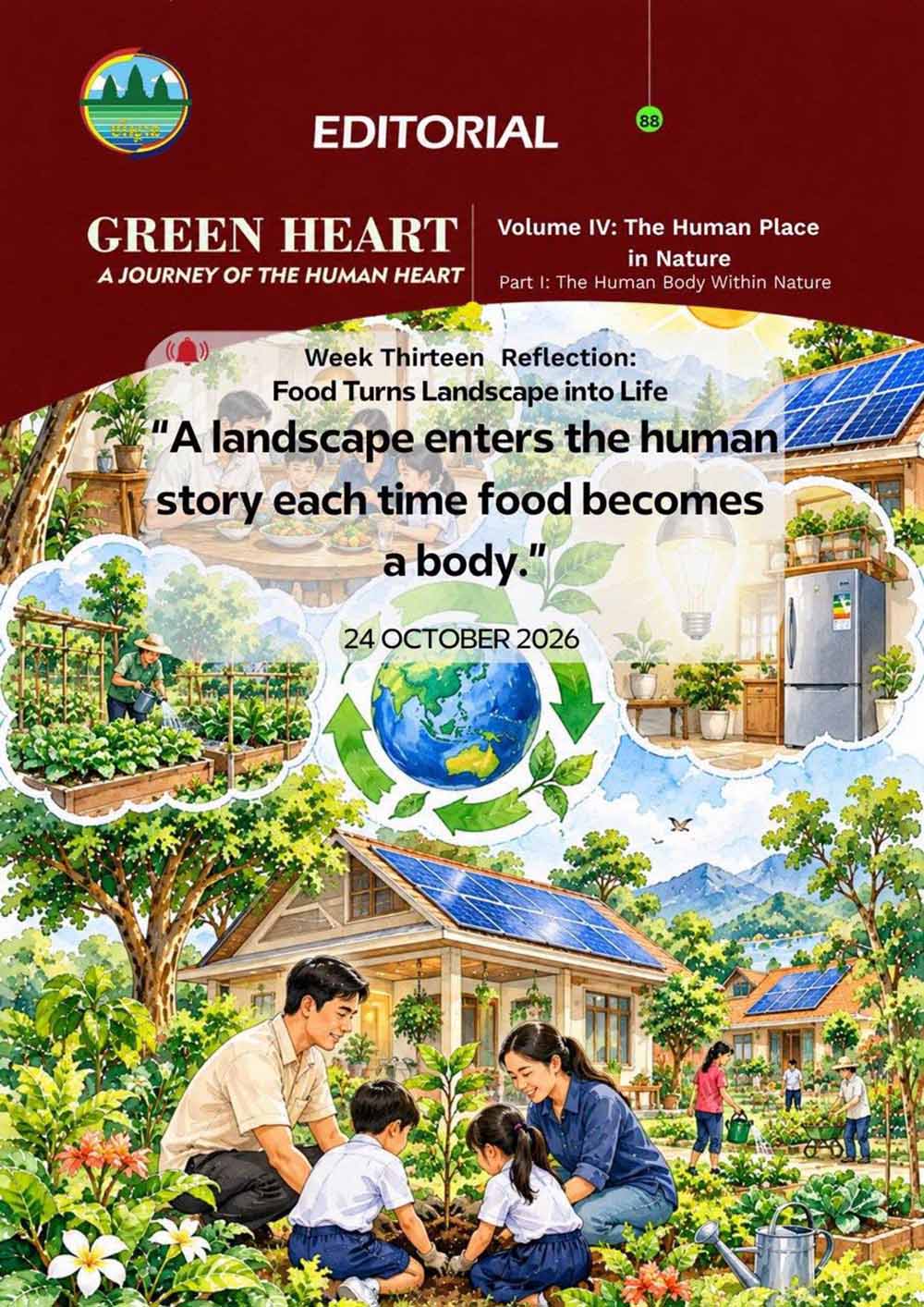
“A landscape enters the human story each time food becomes a body.”
Editorial
Rice becomes energy for walking. Fruit becomes vitamins and tissue. Fish, beans, vegetables, grains, eggs, or other foods provide materials for growth and repair. Through digestion, landscapes become living bodies.
Every meal reflects place. Soil, rainfall, rivers, seasons, seeds, animals, farmers, fishers, roads, markets, cooks, and culture shape what reaches the plate. Food is ecology transformed by knowledge and labor.
Nutrition requires variety and balance. Different people have different needs, allergies, medical conditions, cultures, and available foods. Health professionals and trusted guidance should shape individual choices, not environmental slogans.
Environmental impacts also vary. A crop grown in one region may require little irrigation and much more in another. Fish from a well-managed local fishery differs from fish taken illegally or from a damaged habitat. Production method and context matter.
The Green Heart does not divide foods into morally pure and impure categories. It asks practical questions: Was the food produced safely? Were workers treated with dignity? Was water protected? Was waste reduced? Can the system continue?
Traditional food knowledge may hold valuable lessons about seasons, local diversity, preservation, and using whole ingredients. Modern science contributes nutrition, food safety, crop improvement, storage, and processing. Respectful exchange can strengthen both.
Food access is unequal. Some people waste excess while others cannot obtain enough nourishing food. Environmental policy should support food security, not make healthy food harder for vulnerable families to afford.
Eating connects personal health with landscape health, but responsibility should be proportionate. Consumers can plan portions, value diverse foods, and seek credible information. Governments, businesses, and institutions must improve production, transport, markets, and waste systems.
Before a meal, pause with gratitude—not only for the finished dish, but for the field, water, species, hands, knowledge, and culture within it.
Food turns landscape into life. The life it creates can return the gift through wisdom, service, and care.
The relationship continues after eating. Bodies transform food into work, thought, heat, and waste. Sanitation then protects water and soil. A responsible food system therefore reaches beyond the plate into health, learning, and the safe return of materials.
Food also becomes relationship at the table. Shared meals can carry language, memory, hospitality, and care, reminding us that nourishment is social as well as biological.
Buddhist Reflection
Mindful eating recognizes the conditions behind nourishment. It avoids both careless excess and harsh judgment. Gratitude becomes a middle path joining health, contentment, and responsibility.
Today’s Reflection
Which landscape and community are present within one food I eat often?
Today’s Action
Choose one ingredient and trace it from ecosystem to producer, market, kitchen, body, and possible waste.
Today’s Pledge
Today I will eat with gratitude for the landscapes and lives that nourish me.
When we protect nature, we protect all beings—including ourselves.
#វិចារណកថា #eang #editorial #sophalleth