

Opening Thought
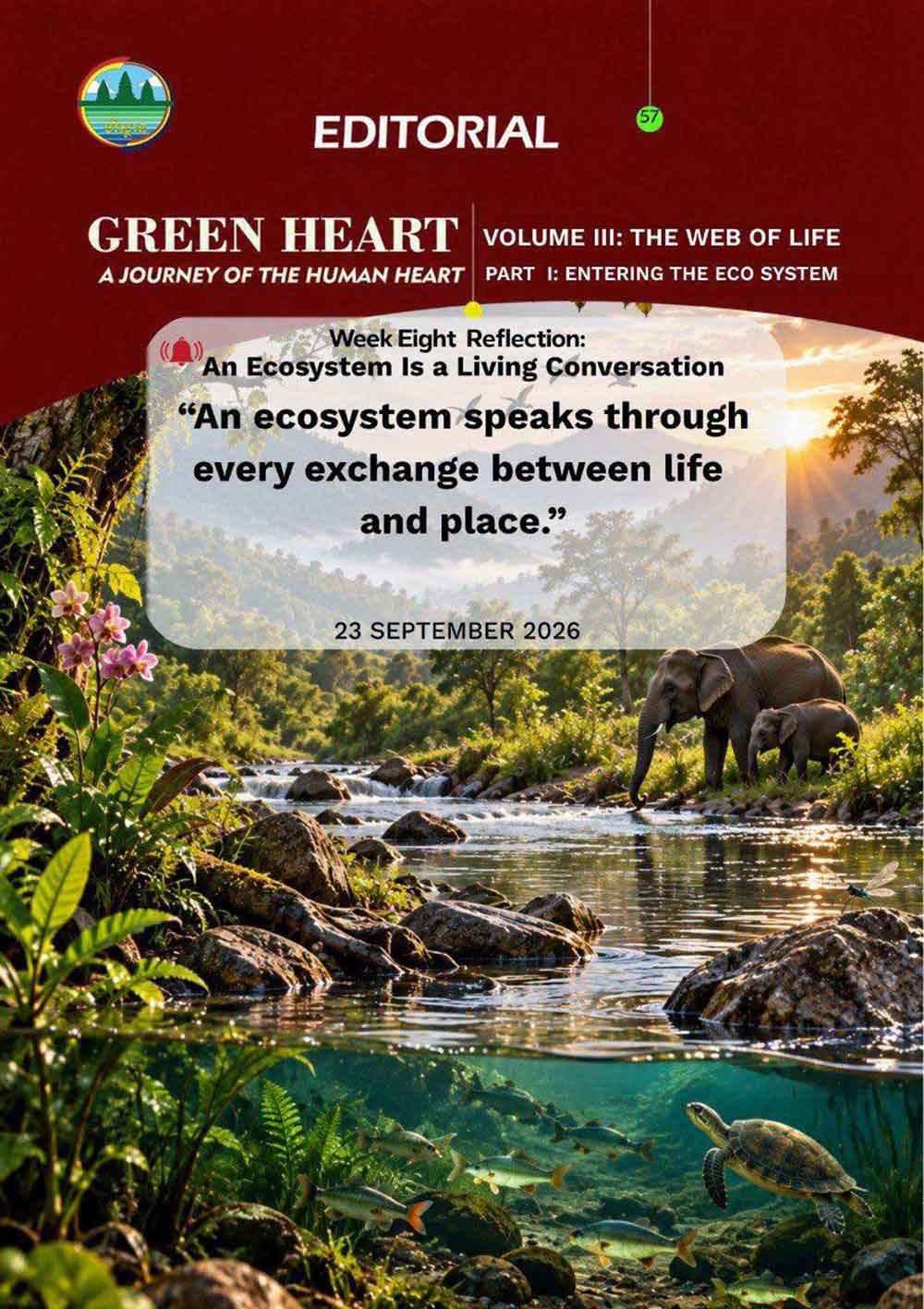
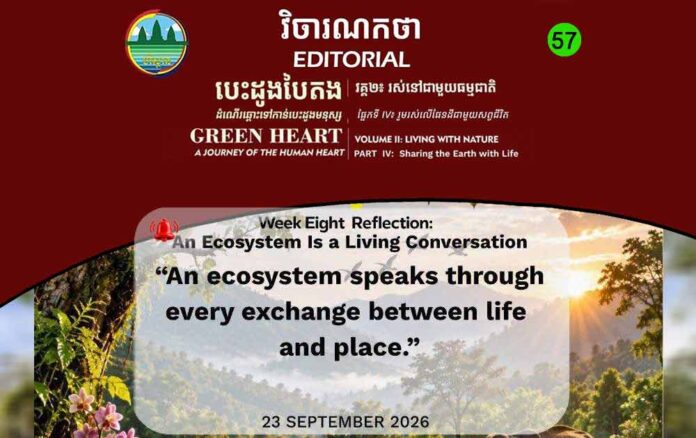
“An ecosystem speaks through every exchange between life and place.”
Editorial
A pond contains fish, insects, plants, microorganisms, water, mud, light, and dissolved substances. A forest contains trees, fungi, animals, soil, air, and streams. We call each an ecosystem when we consider the living community together with the nonliving environment and the interactions among them.
An ecosystem is not defined only by size. It may be a small pool, a grassland, a mangrove forest, or a vast ocean region. Its boundaries depend on the question we are asking. A scientist studying one fallen log may treat it as a system, while another studies the entire watershed around it.
Energy and materials connect the parts. Plants use light, organisms eat and are eaten, decomposers transform dead material, water carries nutrients, and temperature influences activity. A change in one part can influence many others.
This does not mean that every ecosystem is perfectly balanced or that every change is harmful. Floods, fires, storms, migration, growth, and death may be natural parts of ecological life. Ecosystems are dynamic. Their conditions and communities shift over time.
Human beings participate too. Farms, cities, fishing areas, and managed forests are ecosystems shaped strongly by people. Our choices alter flows of water, nutrients, species, energy, and waste. We are not observers standing outside the conversation.
Understanding an ecosystem requires patience. One visit shows a moment, not the whole story. Repeated observation across day, night, wet season, dry season, youth, and maturity reveals different relationships.
The word conversation helps us remember that influence moves in many directions. Soil affects plants, but plants also change soil. Water shapes life, but living things can alter water movement and quality. Predators affect prey, while prey abundance affects predators.
When we protect only one visible species without considering its relationships, our help may be incomplete. Wise conservation asks what the species needs, what needs it, and which conditions hold the community together.
Choose one nearby place and look for the conversation. What receives light? What moves water? What feeds? What decomposes? What changes the place? You may discover that silence in nature is filled with exchange.
Return to that place more than once. Morning may reveal pollinators, evening may reveal bats, and rain may reveal paths of water invisible on a dry day. Each visit adds another voice. Understanding grows when observation becomes a relationship rather than a brief inspection.
Buddhist Reflection
Interdependence means that things arise and continue through causes and conditions. An ecosystem makes this teaching visible. No member exists entirely alone, and no action remains entirely separate from the whole.
Today’s Reflection
Which relationship turns a group of organisms and a place into an ecosystem?
Today’s Action
Draw one local ecosystem with at least five living and three nonliving parts. Connect them with labeled arrows.
Today’s Pledge
Today I will look for relationships and remember that I participate in the living conversation.
When we protect nature, we protect all beings—including ourselves.