

Opening Thought
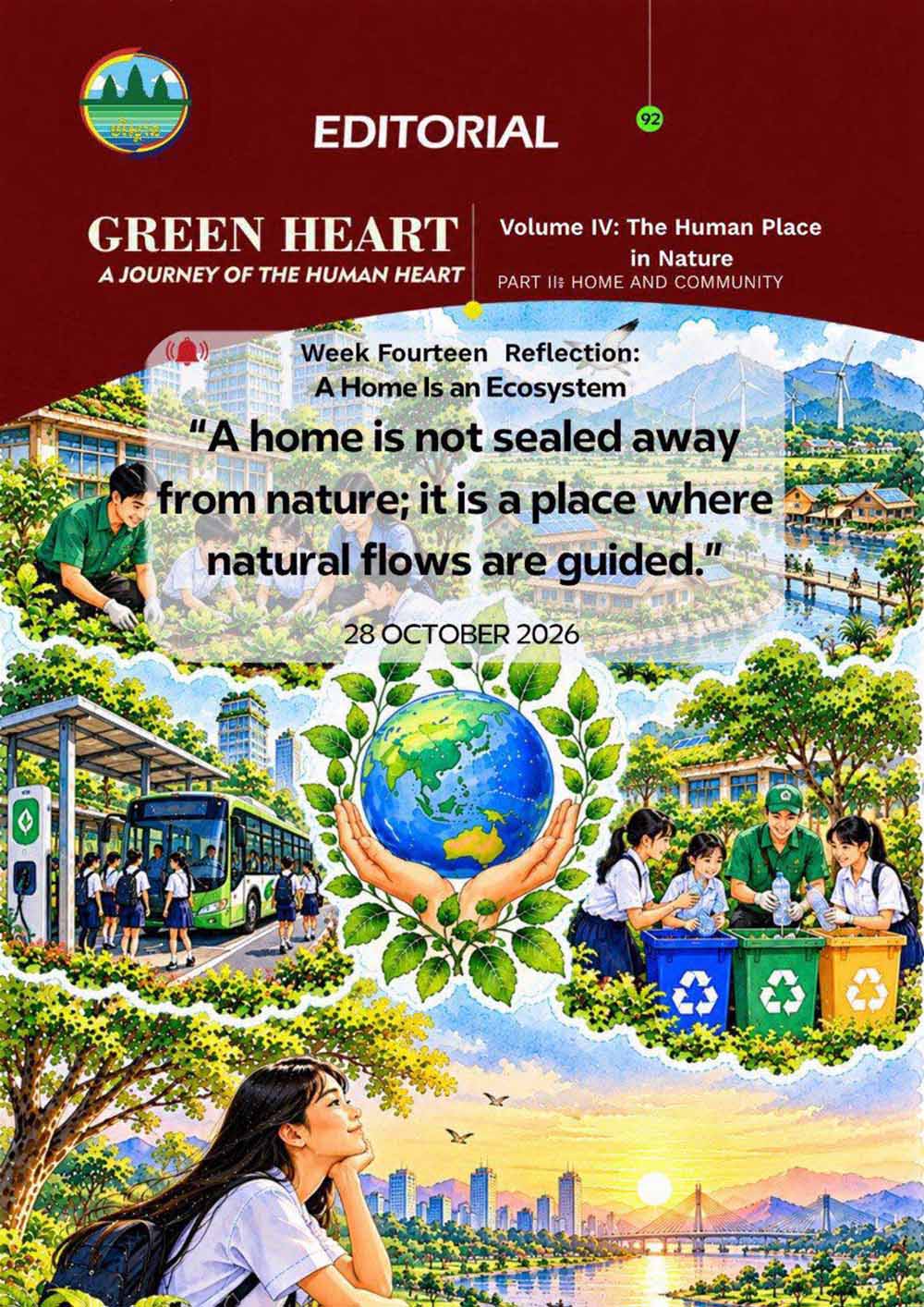
“A home is not sealed away from nature; it is a place where natural flows are guided.”
Editorial
A home receives water, energy, food, air, materials, sunlight, people, and other living organisms. It releases wastewater, heat, air, rubbish, sound, and human activity. In this sense, a home functions like an ecosystem with flows entering, changing, and leaving.
Building materials begin in landscapes: wood, stone, clay, metals, glass, cement, and plastics all require resources and energy. The choices made during construction influence temperature, ventilation, safety, durability, and future waste.
Climate-responsive design works with local conditions. Shade, roof form, orientation, windows, insulation, vegetation, and airflow can reduce heat or conserve warmth. Traditional architecture may contain valuable lessons, while modern engineering adds safety, efficiency, and new materials.
No single design fits every household. Flood risk, earthquakes, fire, storms, insects, disability, family size, income, culture, and land all matter. Environmental design should not sacrifice health or safety for appearance.
Homes also contain biodiversity. Helpful insects, unwanted pests, plants, pets, and microorganisms share indoor and outdoor spaces. Safe food storage, screens, cleaning, drainage, and repair can manage risks without excessive chemical use.
Energy choices shape indoor air and climate impact. Clean cooking, efficient appliances, safe wiring, renewable energy, and thoughtful use may help, but affordability and access determine what families can choose.
Water enters for drinking, cooking, washing, and sanitation. Leaks and poor drainage can waste water and damage health. Waste leaving the home needs reliable collection or safe treatment; moving it beyond the fence does not remove responsibility.
A green home is not necessarily expensive or filled with special products. It may be a modest place that uses shade well, repairs items, prevents waste, keeps water safe, and supports dignity.
Look at your home as a system. Where does sunlight enter? Where does rain go? What produces heat? Which items are used repeatedly? Where do materials leave?
The goal is not to judge the household. It is to understand the flows and improve one at a time. A caring home becomes a meeting place between human comfort and environmental responsibility.
Improvements can begin with maintenance. A repaired screen reduces pests, a sealed leak saves water, a cleaned vent improves airflow, and a shaded wall reduces heat. Maintenance lacks the excitement of a new product, but it often extends usefulness with fewer resources.
Families can keep a simple seasonal checklist so small problems are found before they become costly damage.
Buddhist Reflection
Mindfulness begins in ordinary spaces. A home can become a place to practice contentment, gratitude, cleanliness, and care for shared resources rather than a place of endless consumption.
Today’s Reflection
Which flow through my home—air, water, food, energy, or materials—could be guided more wisely?
Today’s Action
Draw a home-flow map showing five inputs, five uses, and five outputs. Circle one safe improvement.
Today’s Pledge
Today I will help my home become a healthy meeting place between people and nature.
When we protect nature, we protect all beings—including ourselves.