


Opening Thought
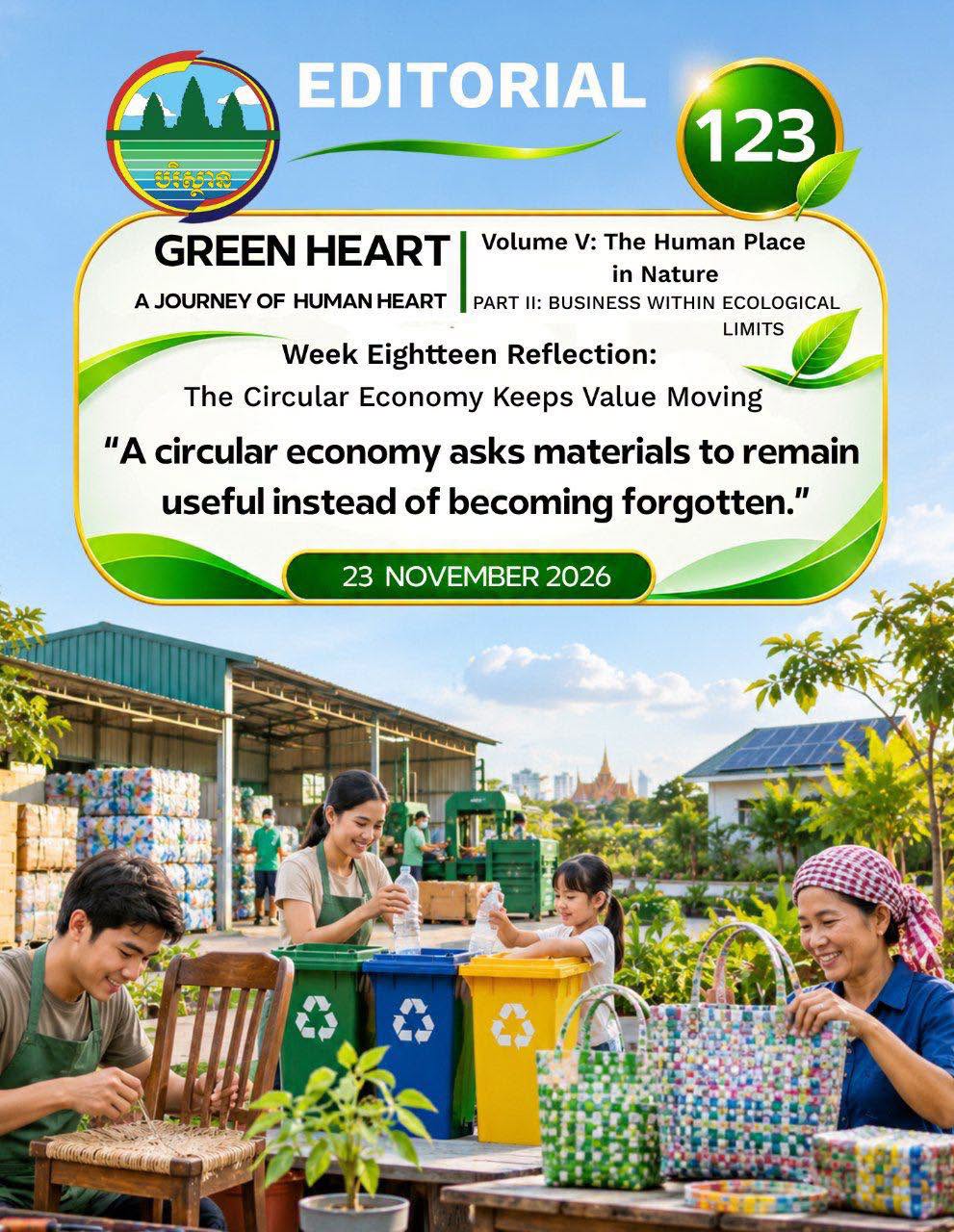
“A circular economy asks materials to remain useful instead of becoming forgotten.”
Editorial
The traditional linear economy is often described as take, make, use, and discard. A circular economy seeks to prevent waste, keep products and materials useful, and regenerate natural systems where possible.
The strongest circle may be no material at all: avoid an unnecessary product or provide the service in another way. Sharing, maintenance, reuse, repair, refurbishment, and remanufacturing generally preserve more product value than breaking it into raw material.
Recycling remains important, especially when products can no longer be used. Yet collection, sorting, contamination, energy, quality loss, and market demand limit recycling. A recyclable label does not guarantee a real cycle.
Biological materials may return safely through composting or other processes when they are uncontaminated and systems are appropriate. Technical materials such as metals and plastics need separate recovery pathways.
Circularity must avoid moving harm around the circle. Reusing a container that cannot be cleaned safely is not wise. Recycling electronics without worker protection exposes people to toxins. Shipping low-value waste across long distances may hide impacts.
Product-as-a-service models can give producers responsibility for maintenance and recovery. Leasing lighting, equipment, or uniforms may encourage durability, but contracts must protect customers and avoid dependence.
Circular businesses create jobs in repair, logistics, cleaning, inspection, resale, remanufacturing, design, and material recovery. These jobs need training, safety, dignity, and reliable demand.
Information supports circulation. Product passports, labels, repair manuals, material lists, and tracking can help users and recyclers make decisions. Privacy and cost should be considered.
Circularity also depends on scale. A refill shop needs suppliers and customers. A recycling facility needs clean material and markets. One business cannot close every loop alone.
Nature cycles materials, but the economy uses substances and mixtures nature cannot safely absorb. The goal is not to copy nature carelessly, but to design human systems that respect ecological limits.
Keep value moving, keep harm out of the loop, and circularity becomes more than a symbol.
Performance should measure avoided new material, product life, safe reuse cycles, recovery quality, worker conditions, and total energy—not simply the amount collected. Collection without useful recovery is not a completed circle.
Buddhist Reflection
Impermanence teaches that products will change and end. Mindful design prepares for that change, using materials respectfully rather than pretending disposal makes them disappear.
Today’s Reflection
Which circular strategy preserves more value than recycling?
Today’s Action
Choose one product and design its path through sharing, maintenance, repair, reuse, refurbishment, and final recovery.
Today’s Pledge
Today I will keep useful value moving and prevent harm from circling through people and nature.
When we protect nature, we protect all beings—including ourselves.