'/%3E%3C/svg%3E)
'/%3E%3C/svg%3E)


Opening Thought
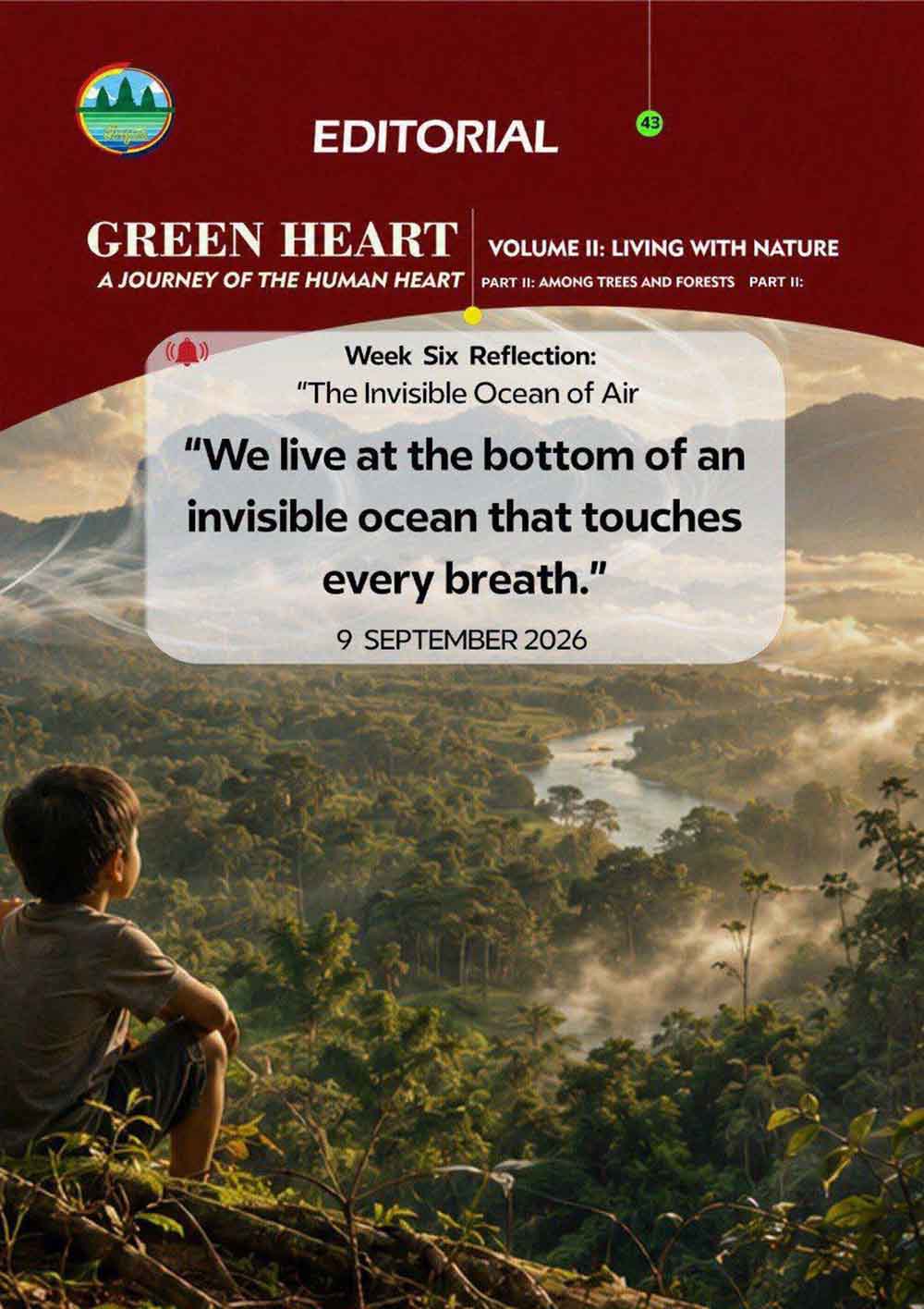
“We live at the bottom of an invisible ocean that touches every breath.”
Editorial
Air feels like empty space, but it has mass, pressure, movement, moisture, and a mixture of gases. It surrounds the planet in layers we call the atmosphere. Weather occurs mainly in the lowest layer, where clouds form and living beings breathe.
The atmosphere helps make Earth habitable. It supplies gases needed by life, moves heat and moisture, and shields the surface from some harmful radiation and many small space objects. Greenhouse gases naturally retain some heat; without this effect, Earth would be far colder. Human activities have increased concentrations of several greenhouse gases, strengthening warming and changing the climate.
Air also carries dust, sea salt, pollen, smoke, and pollution. Some particles are natural, while others result from burning, vehicles, industry, construction, agriculture, or household activities. Their effects depend on size, chemistry, concentration, duration, and human health.
Because air is shared, no wall can fully separate one person’s emissions from another person’s lungs. Protecting air requires standards, cleaner technologies, responsible energy and transport, safe household practices, and cooperation across regions.
Students can contribute without carrying the whole burden. Avoid burning rubbish. Walk, cycle, share transport, or use public transport where safe and practical. Save electricity, follow air-quality guidance, and support trees suited to the landscape. Larger improvements require collective systems, not personal guilt.
The invisible nature of air makes measurement important. Scientists use instruments to track pollutants, weather, and greenhouse gases. Reliable data turns what cannot be seen into information communities can use.
Air teaches humility. We depend on something we cannot hold, own, or control. It enters every person without asking about wealth, age, nationality, or belief.
Step outside and feel the atmosphere as pressure, breeze, warmth, or moisture. You are not standing in emptiness. You are immersed in a moving ocean that connects forests, cities, farms, oceans, and every breathing life.
What is invisible can still be shared, vulnerable, and worthy of protection.
Clean-air progress is possible. Many places have reduced particular pollutants through better fuels, technology, standards, monitoring, and public understanding. Remembering success protects us from despair and shows that collective choices can improve an invisible commons.
Hope becomes credible when it is supported by evidence, cooperation, and continued effort.
Buddhist Reflection
The breath is personal and universal at once. Mindfulness of breathing can awaken gratitude, while awareness of shared air expands compassion. What supports me also supports strangers and other beings.
Today’s Reflection
How does thinking of air as a shared ocean change the way I view pollution?
Today’s Action
Check a reliable local air-quality or weather source if available, and choose one safe action that reduces unnecessary smoke or energy use.
Today’s Pledge
Today I will respect the invisible ocean that connects every breathing life.
When we protect nature, we protect all beings—including ourselves.