'/%3E%3C/svg%3E)
'/%3E%3C/svg%3E)



Opening Thought
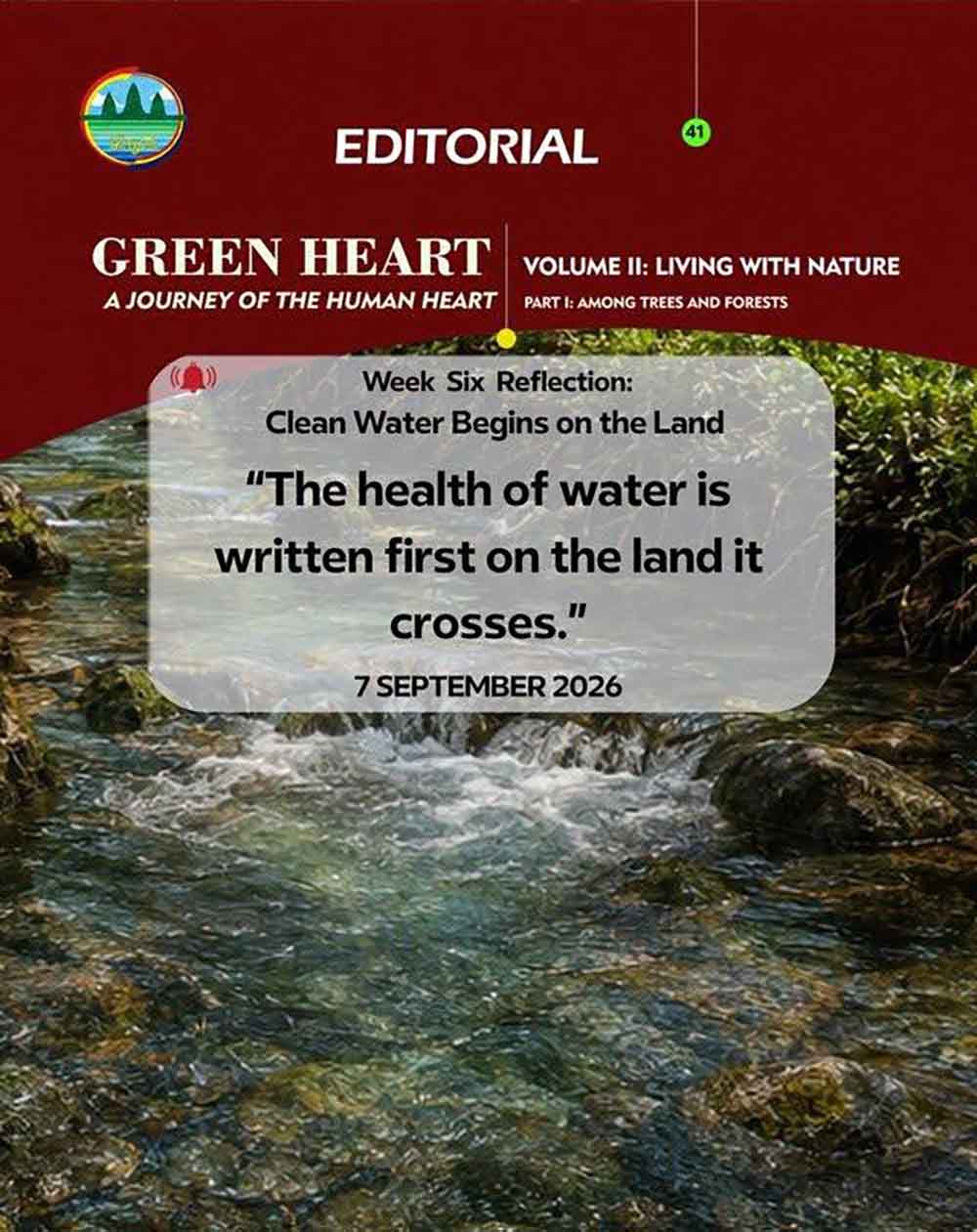
“The health of water is written first on the land it crosses.”
Editorial
When a river becomes dirty, we naturally look at the water. Yet the cause may begin far away on land: bare soil washing downhill, rubbish carried by rain, a leaking system, spilled fuel, or nutrients moving from fields and yards.
A watershed gathers everything downhill. Water connects roads, farms, forests, homes, schools, factories, and wetlands. Protecting the river therefore requires care across the entire landscape.
Soil cover is important. Plants, crop residues, mulch, and other appropriate practices can reduce erosion by softening rainfall and slowing runoff. Along streams, vegetated buffer areas may trap sediment, shade water, and provide habitat. The best design depends on slope, soil, climate, crops, and local needs.
Waste systems matter too. Toilets, septic systems, animal waste, landfills, and industrial processes must be properly located and managed. These are not problems students should fix themselves, but students can understand why infrastructure and maintenance protect health.
Household choices contribute. Never pour paint, oil, medicine, pesticides, or unknown chemicals into drains or onto the ground. Disposal rules differ, so ask local authorities or responsible adults for guidance. Even products labeled natural can cause harm in the wrong amount or place.
Clean water protection should not blame farmers, families, or workers. People need food, sanitation, transport, and livelihoods. The task is to develop practical methods that meet human needs while reducing pollution. Cooperation and fair support create better results than accusation.
Monitoring turns concern into knowledge. Scientists and trained community groups may test temperature, clarity, oxygen, nutrients, bacteria, or other indicators. A single observation rarely explains everything; repeated measurements reveal patterns.
The land and water are two pages of one story. A clean riverbank beside polluted upstream land cannot protect the whole flow. A healthy watershed combines many good practices, each fitted to its place.
Before the next rain, look at the ground. What might water pick up? Where would it travel? One prevented spill, protected patch of soil, or correctly handled item can keep a problem from ever reaching the water.
Prevention also saves effort. Removing pollution after it spreads through sediment, groundwater, or food webs may take years and great expense. Keeping harmful material contained at its source is often simpler, safer, and fairer to downstream communities.
The cleanest pollution is the pollution that never enters the water.
Buddhist Reflection
To address suffering wisely, we look for its causes rather than treating only visible symptoms. Clean water begins by caring for the conditions upstream. This is applied wisdom: understanding deeply enough to prevent harm.
Today’s Reflection
What could rain carry from my school or home toward a waterway?
Today’s Action
Safely remove one item that could become stormwater pollution, or report a spill or erosion concern to an adult.
Today’s Pledge
Today I will protect water by caring for the land before the rain arrives.
When we protect nature, we protect all beings—including ourselves.